Piazza Navona, a stadium for water games
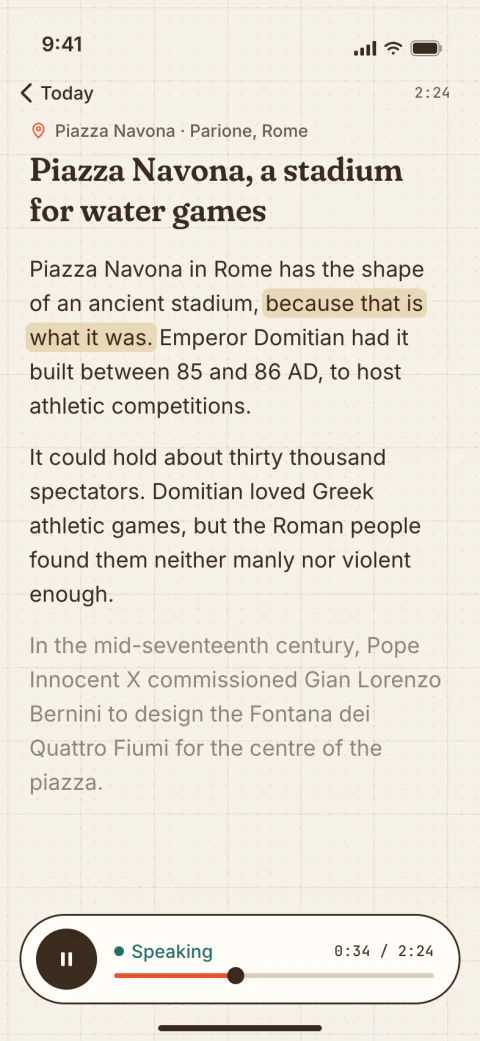
Piazza Navona in Rome has the shape of an ancient stadium, because that is what it was. Emperor Domitian had it built in the eighties, between 85 and 86 AD, to host athletic competitions. It was the first masonry stadium in the Greco-Roman world.
The stadium was long and narrow, with one semicircular end, and could hold about thirty thousand spectators. Domitian loved Greek athletic games, but the Roman people found them neither manly nor violent enough. The stadium was restored in the third century and remained in use until the fifth century.
In the mid-seventeenth century, Pope Innocent X commissioned Gian Lorenzo Bernini to design the Fontana dei Quattro Fiumi for the center of the piazza. It portrays the four main rivers of the Earth, one for each continent known at the time: the Danube, the Ganges, the Nile, and the Rio de la Plata. To fund the fountain, the Pope taxed bread, which reduced the standard weight of a loaf. This made the people of Rome hate his sister-in-law, Olimpia Maidalchini, whom they blamed for the indignity. The fountain is still there, and the loaf is still smaller. Some decisions have a long shelf life.
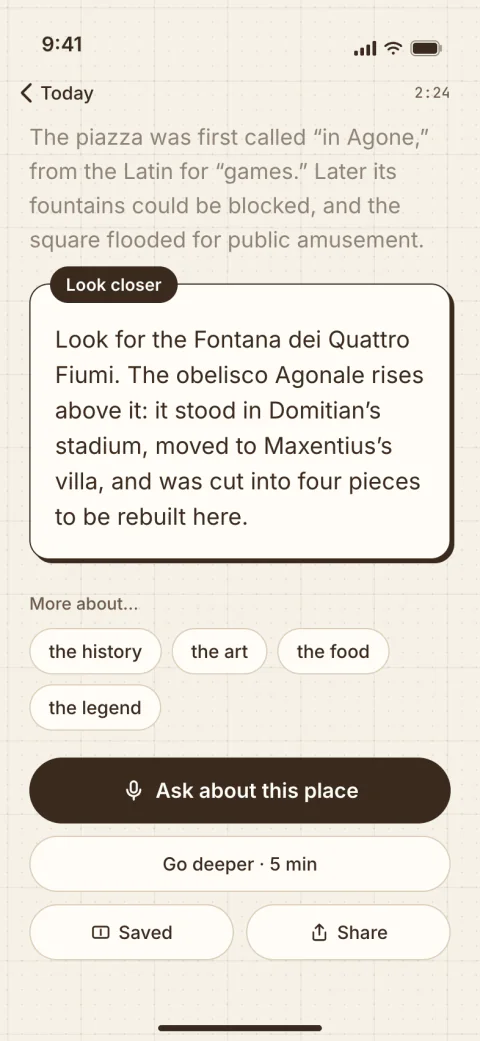
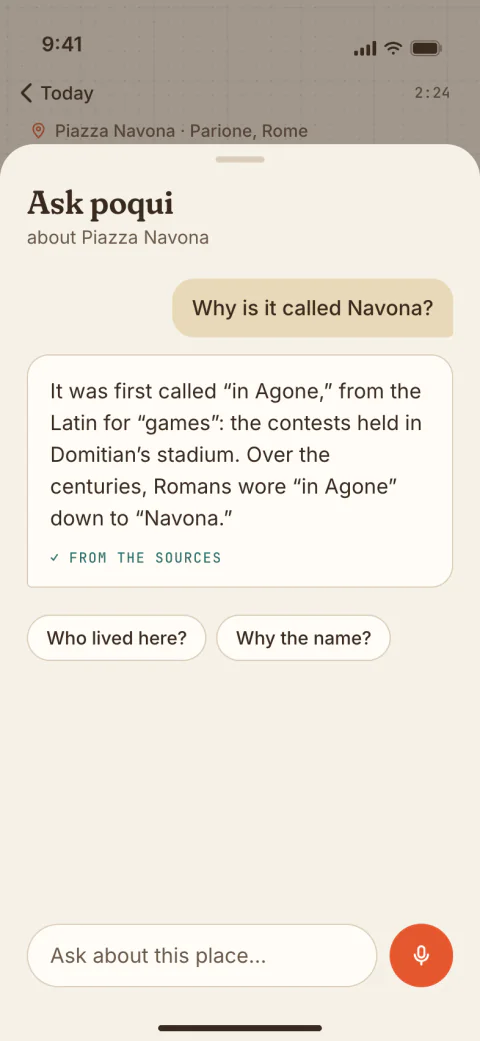
The piazza was originally called “in Agone,” from the Latin for “games.” Later, it became known for its water games. The three fountains in the piazza could be blocked, allowing the square to flood. This was done for public amusement until the late nineteenth century.
Tip: tap any sentence to jump to it. In the app, the story keeps playing with your iPhone locked.
Written from Wikipedia’s articles on Piazza Navona, the Stadium of Domitian, the Fountain of the Four Rivers and the Agonalis Obelisk (Italian edition, CC BY-SA). Every poqui story lists its sources like this.